Network Cabling Explained: Cat5e, Cat6, or Cat6a?
Network Cabling Explained: Cat5e, Cat6, or Cat6a?
Network cabling is the nervous system of a building. Once装修 is complete, replacing cables is expensive and disruptive. Choosing the right cable at the planning stage is critical. Many customers ask: what is the real difference?
Cat5e (Enhanced Category 5)
Speed: 1 Gbps (Gigabit)
Bandwidth: 100 MHz
Current Status: Once the standard, but now being phased out. While it handles basic internet needs, its抗干扰 capability and long-distance stability are weaker. Unless预算 is extremely tight, Cat5e is not recommended for new installations.
Cat6 (Category 6)
Speed: 1 Gbps / 10 Gbps (short distance)
Bandwidth: 250 MHz
Current Status: The current mainstream standard. Its built-in cross-separator reduces crosstalk significantly. It supports Gigabit networks perfectly and can handle 10G transmission within 55 metres. Best value for most offices and homes.
Cat6a (Augmented Category 6)
Speed: 10 Gbps
Bandwidth: 500 MHz
Current Status: The future-proof choice. It reliably supports 10 Gigabit networks over 100 metres. The cable is thicker with better shielding. As WiFi 6/6E and even WiFi 7 become mainstream, wireless APs place increasing bandwidth demands on the wired backbone — Cat6a ensures the backbone does not become a bottleneck.
Fiber Optic
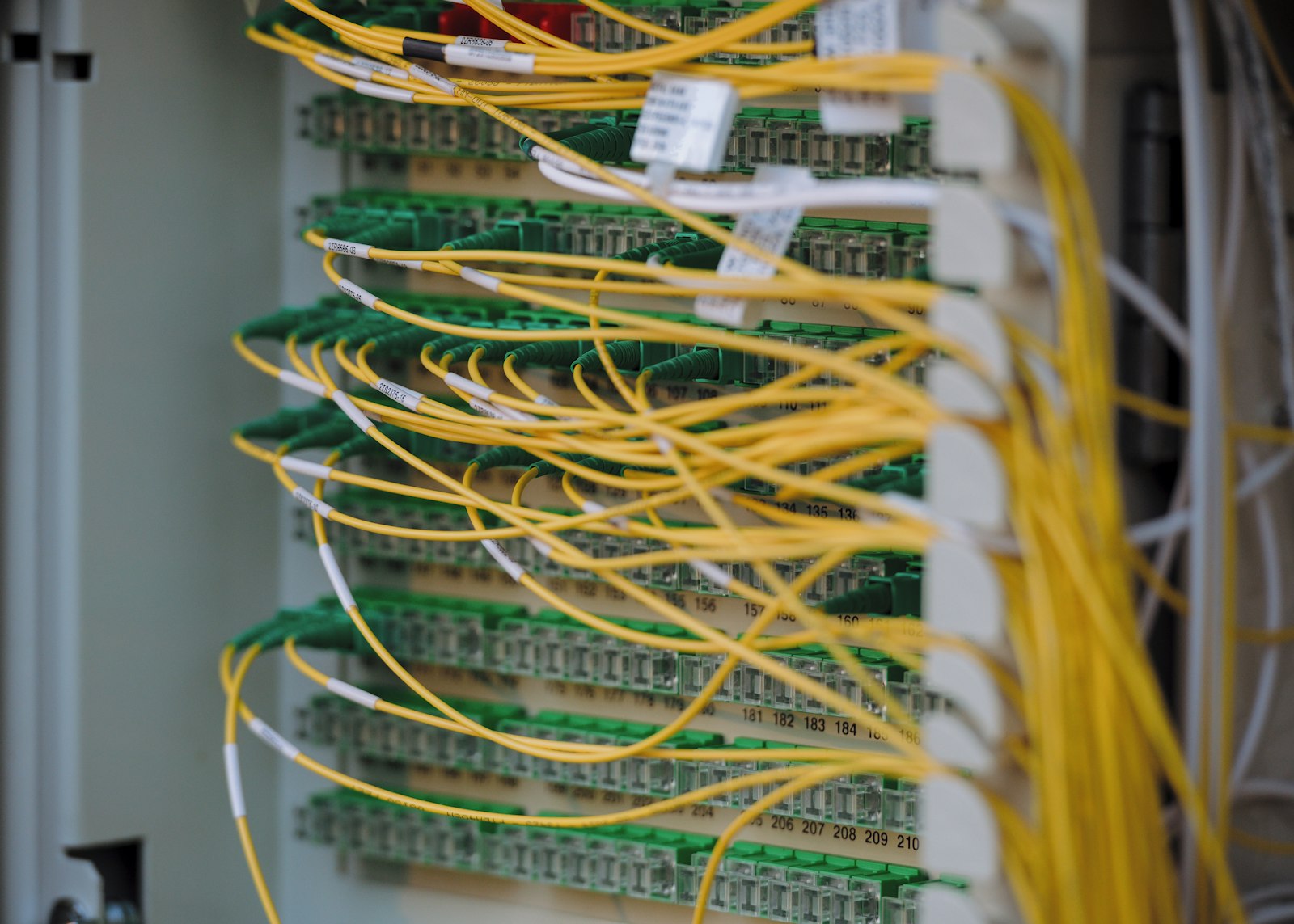
For long-distance connections between floors or server rooms, fibre optic is the only choice. It is immune to electromagnetic interference, offers virtually unlimited distance, and has immense speed potential.
Expert Recommendation
For typical commercial offices, Cat6 is the minimum standard. If your business involves design, video editing, or other data-intensive work, or if you plan to deploy high-performance WiFi 6 APs, install Cat6a at关键 nodes (servers, AP locations). Spending a little more on the backbone ensures smooth network performance for the next 5 to 10 years.