2026 AI CCTV Trends: How Edge AI Is Transforming Surveillance System Design
2026 AI CCTV Trends: How Edge AI Is Transforming Surveillance System Design
Recent security industry news and trade exhibitions all point in the same direction: CCTV is no longer just a "review footage after the fact" recording system — it is gradually becoming a real-time sensing network with instant judgment capabilities. For Hong Kong retail shops, offices, warehouses, schools, and residential estates, the greatest value of AI CCTV is not hype but the ability to transform vast amounts of video into actionable events.
The Core Value of Edge AI
Traditional analytics rely on centralised processing by NVRs or cloud servers, which can suffer from network latency, bandwidth limitations, or alert delays when many cameras are online simultaneously. Edge AI shifts some of the processing load to the camera or edge device, allowing the system to first identify people, vehicles, border crossings, loitering, falls, or abnormal gatherings on-site, then relay only critical events back to the platform.
Most Practical Features for SMEs
- Human/Vehicle Classification: Reduces false alarms from tree shadows, rain, and insects.
- Boundary Crossing Detection: Ideal for back alleys, warehouse doors, plant rooms, and car parks.
- Smart Search: Quickly locate footage by person, vehicle, time, or zone.
- Instant Notifications: Integrate with mobile apps, alarm systems, access control, or security centres.
Don't Just Look for "AI" on the Spec Sheet
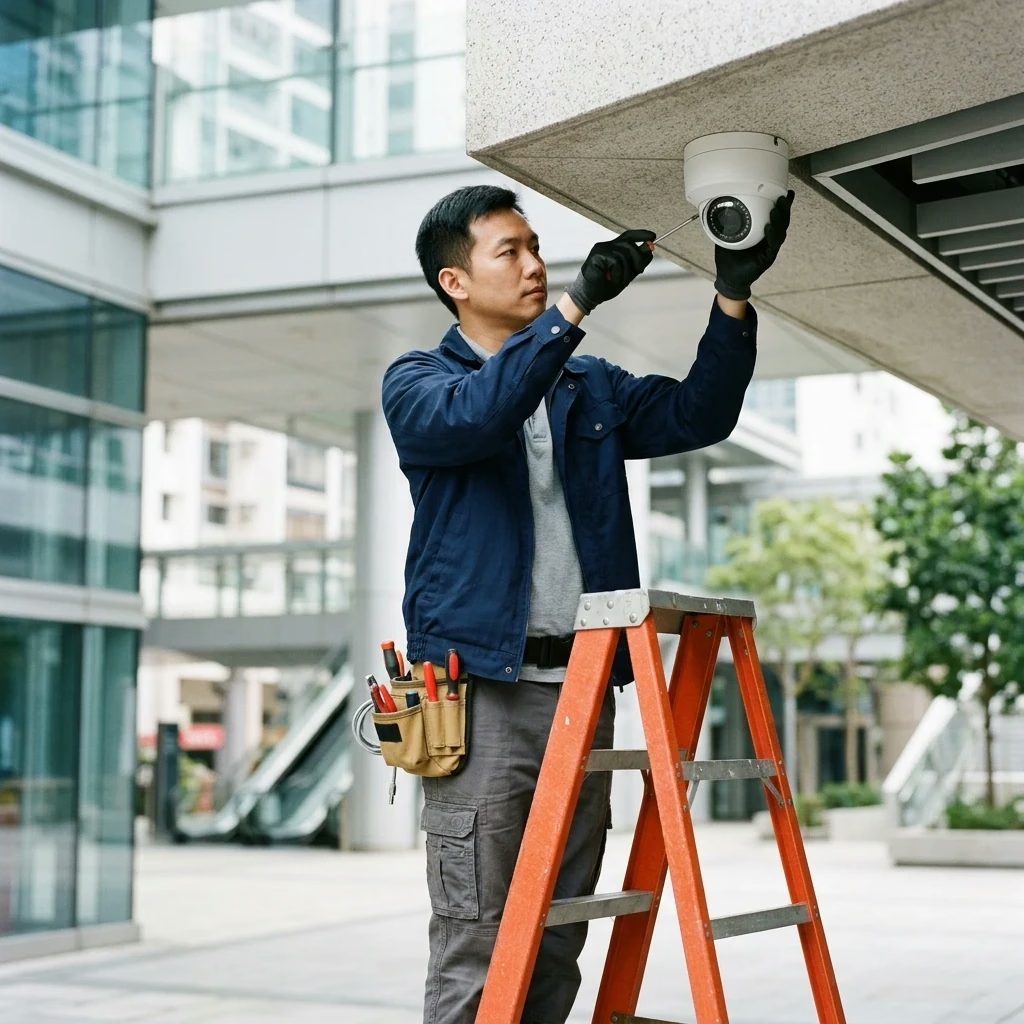
AI accuracy depends on camera angle, lighting, aspect ratio, installation height, and scene configuration. A camera mounted too high will miss facial and movement details; strong backlight will degrade human contour detection; insufficient night-time fill light will significantly reduce analytics performance. Therefore, AI CCTV design must simultaneously consider camera selection, fill lighting, network, storage, and alert rules.
CCTV King's Recommendation
For new systems, prioritise IP cameras that support human/vehicle classification, zone intrusion, event tagging, and remote alerts. For system upgrades, retain usable existing cameras and improve capability by adding an AI-capable NVR or selectively replacing key cameras. This gradual approach avoids unnecessary costs from wholesale replacement.